

Many Nigerians are searching for practical businesses that can generate daily or monthly income without requiring millions of naira in startup capital. Two of the most discussed options today are POS Business and Mini Importation. Both businesses have become popular because they can start small and scale gradually, especially in Nigeria’s growing digital economy.
According to reports from the Central Bank of Nigeria and several Nigerian fintech platforms, agency banking transactions continue rising across urban and rural communities. At the same time, mini importation has expanded due to easier access to suppliers through platforms like Alibaba Group and growing social media marketing opportunities.
The challenge for many beginners is deciding which business offers better profit potential, lower risk, and faster returns. Some people prefer the daily cash flow of POS Business, while others are attracted to the scalability of Mini Importation. The better option depends on your location, available capital, business experience, and long-term goals.
Understanding how both businesses work is the first step toward making a smart investment decision.
Table of Contents
Why Nigerians Are Choosing POS Business and Mini Importation
POS Business and Mini Importation have become attractive because they solve real financial problems while offering flexible income opportunities. Many Nigerians now prefer small-scale businesses that can operate without expensive office spaces or large staff structures. These two business models fit that demand well.
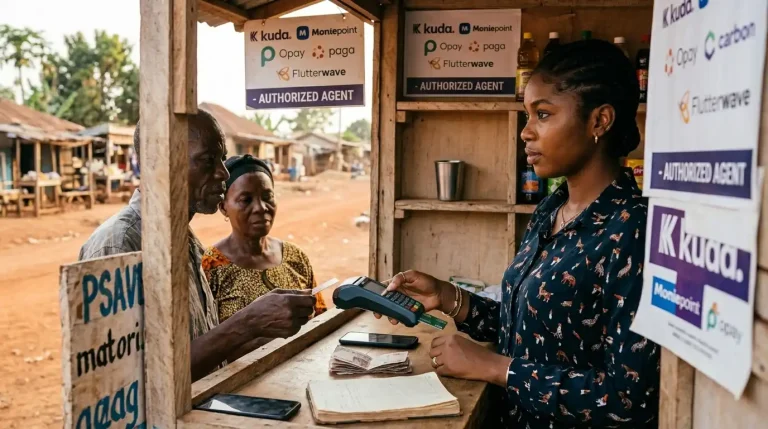
POS Business thrives because many communities still lack easy banking access. Long ATM queues, failed bank transfers, and limited banking infrastructure create strong demand for nearby POS agents. In areas with heavy foot traffic, a POS operator can process hundreds of thousands of naira daily and earn commissions from withdrawals, transfers, and bill payments.
Mini Importation appeals to Nigerians because it allows entrepreneurs to source low-cost products internationally and resell them locally at higher margins. Products such as smartwatches, fashion accessories, kitchen gadgets, phone accessories, and beauty products remain popular across Nigerian social media platforms.
Several reasons explain why these businesses continue growing:
- They can start with relatively low capital compared to traditional businesses.
- Both models work well as side hustles or full-time businesses.
- Mobile banking growth supports POS expansion nationwide.
- Social media marketing has made product sales easier for importers.
- Nigerian youths increasingly prefer entrepreneurship over unemployment.
Although both businesses can generate income, they operate very differently in practice.
POS Business vs Mini Importation: Startup Cost Comparison
Startup cost is one of the biggest deciding factors when choosing between POS Business and Mini Importation. Both businesses can technically start small, but their capital structures differ significantly.

POS Business Startup Cost
A standard POS Business in Nigeria may require:
| Item | Estimated Cost |
|---|---|
| POS machine | ₦20,000 – ₦100,000 |
| Shop rent (optional) | ₦50,000 – ₦300,000 yearly |
| Branding | ₦10,000 – ₦40,000 |
| Cash float | ₦100,000 – ₦500,000 |
| Table/chair/canopy | ₦15,000 – ₦50,000 |
A serious POS setup often requires:
₦150,000 – ₦700,000
depending on location and scale.
Mini Importation Startup Cost
Mini Importation can begin with smaller capital if products are carefully selected.
Typical startup expenses include:
- product purchase
- shipping fees
- customs charges
- marketing costs
- delivery logistics
Some beginners start with:
₦50,000 – ₦150,000
by importing lightweight products from China.
However, larger inventories may require:
- ₦300,000+
- advertising budget
- warehousing
Mini importation usually offers more flexibility for beginners with limited funds.
Which Business Makes Money Faster in Nigeria?
Cash flow speed is one of the most important differences between these businesses. POS Business usually generates daily income immediately after setup, while Mini Importation often requires waiting periods before profits arrive.
A good POS location near:
- markets
- campuses
- motor parks
- busy residential areas
can begin generating commissions from the first day.
Average POS charges in Nigeria include:
- ₦100–₦300 per withdrawal
- transfer commissions
- airtime commissions
- bill payment commissions
Busy agents may process:
₦500,000 – ₦3 million daily
depending on location.
Mini Importation works differently. Profits depend on:
- product demand
- shipping duration
- marketing effectiveness
- customer trust
Importers may wait:
- 2–6 weeks
before receiving products and making sales.
However, Mini Importation can produce higher profit margins on successful products. Some items imported at ₦3,000 may sell for ₦10,000–₦15,000 locally.
POS Business generally wins in:
- daily cash flow
- predictable earnings
- faster turnover
Mini Importation often wins in:
- scalability
- profit margins
- online growth potential
What Is the Difference Between POS Business and Mini Importation?
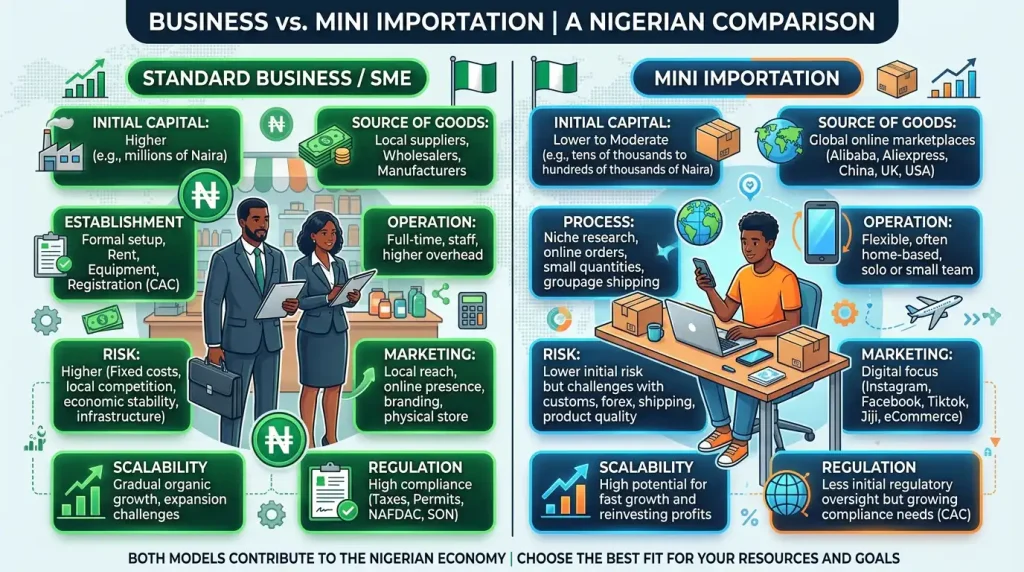
POS Business involves providing financial transaction services using a POS terminal, while Mini Importation involves buying products cheaply from international suppliers and reselling them locally for profit. POS Business depends heavily on cash movement and location traffic, while Mini Importation depends more on product sourcing, marketing, and customer demand.
Key Operational Differences
| Feature | POS Business | Mini Importation |
|---|---|---|
| Income Type | Daily commissions | Product profit margins |
| Capital Risk | Moderate | Moderate to high |
| Scalability | Medium | High |
| Daily Cash Flow | Strong | Variable |
| Requires Inventory | No | Yes |
| Customer Dependence | Location-based | Marketing-based |
POS Business usually requires physical presence. Most agents must attend to customers directly unless they hire staff. Mini Importation allows more remote flexibility because products can be marketed online through:
- TikTok
- Facebook Marketplace
Another major difference is competition. POS Business faces saturation in some urban areas, while Mini Importation depends on finding profitable products before competitors flood the market.
POS Business vs Mini Importation: Risk and Challenges
Every business carries risks, and understanding them helps entrepreneurs prepare properly.
Risks in POS Business
POS operators commonly face:
- robbery
- fake bank alerts
- network failures
- cash shortages
- chargeback disputes
Handling large daily cash volumes also creates security concerns. Agents operating in isolated locations may require extra protection measures.
Another challenge is fintech competition. Platforms like Moniepoint and OPay continue expanding agent networks aggressively.
Risks in Mini Importation
Mini Importation risks include:
- delayed shipping
- fake suppliers
- customs issues
- poor product quality
- unsold inventory
Many beginners also underestimate advertising costs. Buying products alone is not enough; successful sales require:
- quality photos
- customer trust
- marketing strategy
- delivery systems
Importers relying only on viral trends may lose money when product demand drops suddenly.
Both businesses require patience, consistency, and proper financial management.
Which Business Is Easier to Scale?
Mini Importation usually offers stronger long-term scalability because products can expand nationwide through online marketing and logistics partnerships.
A successful importer can grow from:
- WhatsApp sales to full ecommerce stores bulk supply nationwide distribution
POS Business scaling is possible but often slower. Expanding may require:
- multiple agents
- additional POS machines
- larger cash float
- staff monitoring
However, POS Business has one advantage: stable recurring transactions
Customers repeatedly visit trusted agents for withdrawals, transfers, and payments.
Mini Importation offers greater earning potential for entrepreneurs skilled in:
- branding
- advertising
- customer acquisition
- ecommerce
POS Business suits people who prefer:
- stable local operations
- predictable cash movement
- community-based businesses
Best Locations for POS Business in Nigeria
Location directly affects POS profitability. Some agents fail not because the business is bad, but because the location lacks sufficient transaction demand.
High-performing POS locations include:
- markets
- student areas
- motor parks
- semi-urban communities
- underserved residential zones
A strong location usually has:
- limited ATMs
- poor bank access
- high foot traffic
- regular cash transactions
Areas with too many existing POS operators may reduce profit margins significantly.
Before starting, entrepreneurs should observe:
- daily movement
- ATM availability
- competitor density
- network reliability
- local security conditions
Choosing the right location can determine whether a POS Business succeeds or struggles.
How to Start Mini Importation Successfully
Mini Importation requires more planning than many social media influencers suggest. Successful importers focus on product research before spending money.

Basic Mini Importation Steps
- Choose a profitable product niche.
- Find trusted suppliers.
- Order small quantities first.
- Test product quality.
- Create attractive product marketing.
- Use reliable delivery partners.
- Reinvest profits gradually.
Beginners should avoid importing:
- fragile products
- oversized goods
- highly restricted items
Good beginner products include:
- fashion accessories
- phone accessories
- beauty tools
- smart gadgets
- kitchen items
Importers who understand branding and customer psychology usually perform better long term.
Pro Tips to Succeed in POS Business or Mini Importation
Focus on Customer Trust
Trust is essential in both businesses. POS customers want accurate transactions, while Mini Importation buyers want genuine products. Fast communication and honesty improve repeat business significantly.
Start Small Before Scaling
Many Nigerians rush into large investments too early. Testing your system with smaller capital reduces mistakes and helps you understand customer behavior before scaling aggressively.
Reinvest Profits Consistently
Successful entrepreneurs rarely spend early profits immediately. Reinvestment helps:
- increase inventory
- expand operations
- improve marketing
- strengthen cash flow
Learn Basic Financial Management
Understanding:
- bookkeeping
- cash flow
- expenses
- profit margins
helps prevent business collapse.
Use Social Media Strategically
Mini Importers especially benefit from TikTok, Instagram, and Facebook marketing. Consistent posting and customer engagement increase product visibility.
Common Mistakes to Avoid with POS Business and Mini Importation
Choosing a Bad POS Location
Many beginners start in oversaturated areas without studying transaction demand. Poor locations reduce daily commissions drastically.
Importing Trendy Products Blindly
Some importers buy viral products without market research. By the time goods arrive, demand may already decline.
Ignoring Security Risks
POS operators handling cash without proper precautions expose themselves to theft and fraud.
Poor Customer Service
Bad communication destroys repeat business quickly. Nigerian customers value responsiveness and reliability.
Spending Profits Too Early
Many businesses fail because owners consume profits instead of reinvesting into growth.
Best Tools for POS Business and Mini Importation
| Tool | Purpose | Pricing |
|---|---|---|
| Moniepoint | POS agency banking | Freemium |
| OPay | POS and transfers | Freemium |
| Alibaba | Product sourcing | Free |
| Canva | Product marketing designs | Freemium |
| Paystack | Online payment collection | Paid |
| WhatsApp Business | Customer communication | Free |
People Also Ask About POS Business vs Mini Importation
Which business is more profitable in Nigeria?
Profitability depends on execution, location, and consistency. POS Business often produces faster daily cash flow, while Mini Importation can generate larger profit margins over time.
Can POS Business make money daily?
Yes. POS agents earn commissions from withdrawals, transfers, airtime purchases, and bill payments daily, especially in high-traffic areas.
Is Mini Importation risky?
Mini Importation carries risks like delayed shipping, poor-quality products, and changing customer demand, but proper product research reduces those risks significantly.
How much do I need to start Mini Importation?
Some beginners start with ₦50,000–₦150,000 depending on the products selected and marketing strategy.
FAQ About POS Business vs Mini Importation
Is POS Business still profitable in Nigeria in 2026?
Yes. Despite increasing competition, many communities still rely heavily on POS agents because of ATM shortages and banking network problems.
Can I combine POS Business and Mini Importation?
Yes. Some entrepreneurs use POS Business cash flow to fund Mini Importation gradually. This reduces pressure on imported inventory sales.
Which business is better for students?
Mini Importation may suit students better because it can operate online with more flexible hours. POS Business may require consistent physical presence.
Which business has lower risk?
POS Business usually has lower inventory risk because you are not stocking physical products. However, it carries cash-handling and fraud risks.
Do I need CAC registration for these businesses?
Registration is advisable for credibility and expansion, especially when dealing with fintech platforms or ecommerce scaling.
Conclusion
POS Business vs Mini Importation is not simply about which business makes more money. The better choice depends on your:
- capital
- personality
- location
- patience level
- long-term goals
POS Business offers stable daily cash flow and predictable local demand, especially in underserved communities. Mini Importation offers stronger scalability and higher profit margins for entrepreneurs willing to master marketing and product sourcing.
Some Nigerians even combine both models successfully by using POS earnings to fund online inventory purchases gradually. That strategy can reduce financial pressure while building multiple income streams.
If you want more business and online income guides, explore Ways to Make Money Online in Nigeria and discover more practical opportunities for Nigerian entrepreneurs.