

Table of Contents
Flutterwave has become one of the most recognised fintech platforms in Africa, especially among Nigerian businesses looking for reliable online payment processing. As digital commerce continues growing across Nigeria, businesses increasingly need payment gateways that support local bank transfers, cards, international payments, and mobile money in one platform.

According to reports from Techpoint Africa and Statista, digital payments in Africa have expanded rapidly over the past few years due to smartphone adoption, fintech innovation, and increased online shopping behaviour. Many Nigerian startups, freelancers, schools, and eCommerce brands now depend on platforms like Flutterwave to receive payments efficiently from customers across multiple countries.
Businesses choosing a payment gateway today are not only looking for convenience. They want security, scalability, lower transaction friction, API flexibility, and support for local payment methods. Flutterwave addresses many of these concerns while positioning itself as a strong African fintech solution.
Understanding how the platform works can help business owners avoid costly mistakes and improve customer payment experiences.
Why Flutterwave Became a Leading Payment Gateway in Africa

Flutterwave became successful because it solved a major problem for African businesses: fragmented payment systems. Before fintech platforms gained traction, businesses often struggled to receive international payments while still supporting local transfer methods.
The platform simplified payment acceptance by combining:
- Debit card payments
- Bank transfers
- Mobile money
- USSD payments
- International transactions
- Currency conversion support
This flexibility made it attractive to startups and SMEs across Nigeria and Africa.
Another major reason for Flutterwave’s growth is its developer-friendly infrastructure. Many African startups require payment APIs that integrate easily into websites, apps, and SaaS platforms. Flutterwave provides documentation and integration tools that reduce technical barriers for businesses.
For Nigerian entrepreneurs, this matters because many online stores now rely heavily on automation and digital checkout systems. A payment failure during checkout can reduce customer trust immediately.
Flutterwave also benefited from the broader fintech boom across Africa. Investors and businesses began paying more attention to African financial technology companies capable of solving regional problems instead of relying solely on foreign payment processors.
Key reasons businesses choose Flutterwave include:
- Multi-currency payment support
- Strong local bank integration
- Cross-border payment capabilities
- Recurring billing support
- Developer APIs and plugins
- Easy integration with eCommerce platforms
Businesses operating in Nigeria especially appreciate local payment familiarity. Nigerian customers often prefer bank transfers over cards, and Flutterwave supports that behaviour effectively.
How Flutterwave Works for Online Businesses
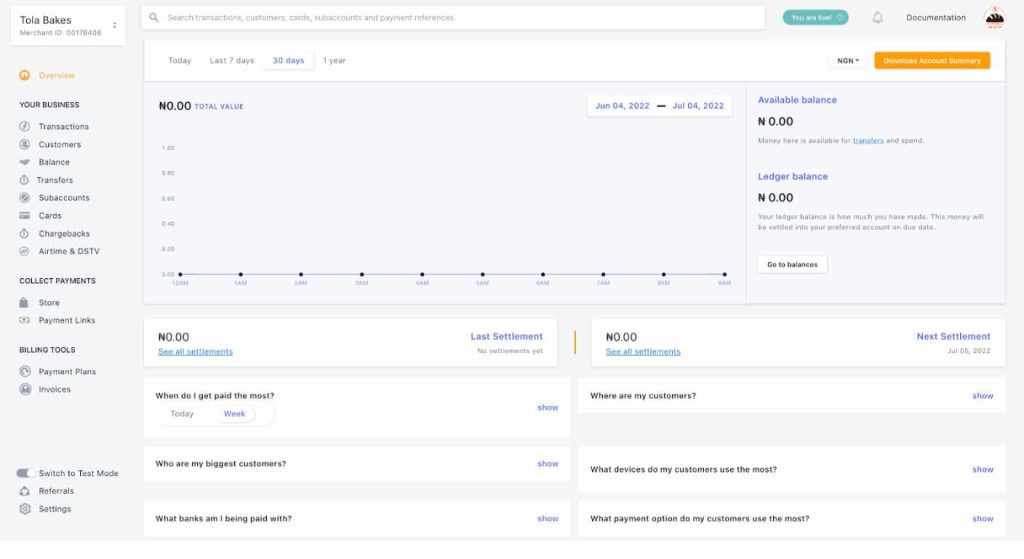
Flutterwave works by acting as an intermediary between customers, merchants, and financial institutions. When a customer initiates payment, the system securely processes the transaction and transfers funds to the merchant account.
For eCommerce businesses, this process typically happens in seconds. Customers can choose their preferred payment method while merchants receive notifications and settlement updates automatically.
The setup process usually involves:
- Creating a business account
- Verifying business details
- Connecting bank accounts
- Integrating payment tools
- Testing transactions
- Going live
For developers, Flutterwave provides APIs that integrate into websites and applications. Non-technical users can use hosted payment links or plugins for platforms like WooCommerce and Shopify.
One advantage Nigerian businesses enjoy is flexibility in payment methods. Many customers prefer transfers instead of cards because of transaction failures or security concerns. Flutterwave supports multiple alternatives that improve checkout completion rates.
The platform also supports invoicing and subscription billing. This makes it useful for:
- SaaS businesses
- Schools
- Membership websites
- Consultants
- Agencies
- Digital creators
Another useful feature is transaction monitoring. Business owners can track:
- Successful payments
- Failed transactions
- Refunds
- Settlement timelines
- Customer payment history
These analytics help businesses identify payment bottlenecks and improve operational efficiency.
What Is Flutterwave Used For?
Flutterwave is used primarily for collecting, processing, and managing online payments for businesses across Africa and internationally. It enables merchants to accept payments through cards, bank transfers, USSD, mobile money, and digital wallets using one central platform.
Beyond payment processing, Flutterwave supports invoicing, subscription billing, recurring payments, API integrations, and eCommerce checkout systems. Businesses ranging from online stores to educational institutions and SaaS startups use the platform to streamline digital transactions.
For Nigerian entrepreneurs, Flutterwave provides a practical solution for handling both local and international payments without needing multiple disconnected systems.
The platform is commonly used by:
- Online stores
- Freelancers
- Subscription businesses
- NGOs
- Educational platforms
- Event organizers
- Travel agencies
- Digital service providers
Small businesses especially benefit from payment links. Instead of building a complete website, sellers can generate payment pages quickly and share them through WhatsApp, Instagram, or email.
Flutterwave also supports international businesses expanding into African markets. Many global companies struggle with local African payment infrastructure, and Flutterwave simplifies regional transaction acceptance.
Common use cases include:
- Selling products online
- Collecting tuition payments
- Subscription management
- Receiving freelance payments
- Event ticket sales
- International business payments
This versatility explains why the platform remains popular among African businesses of different sizes.
Flutterwave vs Paystack: Which Is Better?
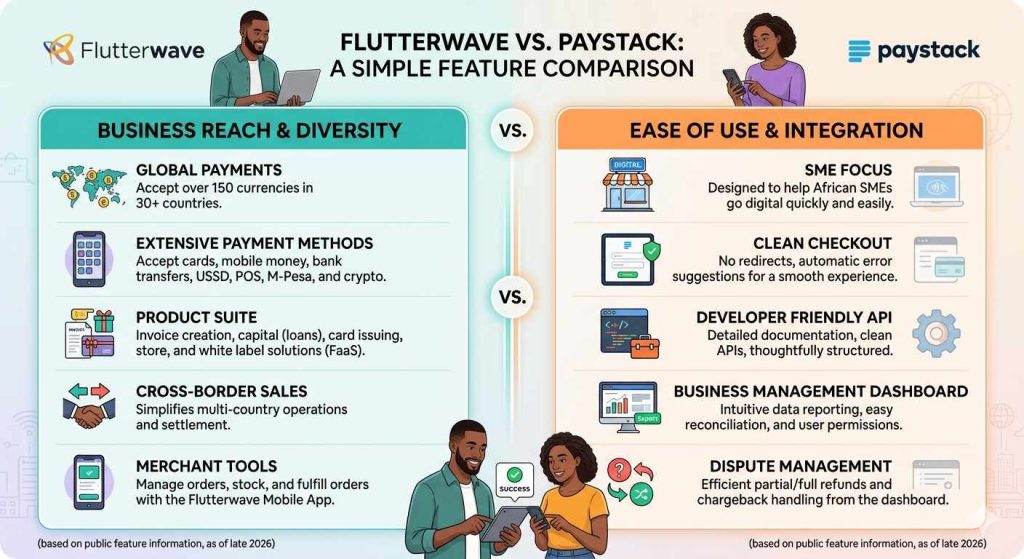
Choosing between Flutterwave and Paystack depends on business goals, technical requirements, and payment preferences. Both platforms are respected Nigerian fintech solutions, but they serve slightly different operational priorities.
Flutterwave is often preferred by businesses needing:
- Strong international reach
- Multi-currency support
- Diverse African payment methods
- Enterprise scalability
Paystack is commonly praised for:
- Simpler onboarding
- Cleaner dashboard interface
- Smooth developer experience
- Strong local business support
For startups targeting multiple African countries, Flutterwave may offer broader flexibility. Businesses focused mainly on Nigeria may prefer Paystack’s streamlined user experience.
Pricing structures between both platforms are relatively competitive, though transaction fees vary depending on payment types and countries.
Key comparison points:
| Feature | Flutterwave | Paystack |
|---|---|---|
| Multi-country support | Strong | Moderate |
| API flexibility | Excellent | Excellent |
| Dashboard simplicity | Good | Excellent |
| African payment options | Extensive | Moderate |
| International scalability | Strong | Good |
| Bank transfer support | Excellent | Excellent |
Another factor is ecosystem compatibility. Some Nigerian businesses integrate both platforms to reduce payment failures and improve redundancy.
Businesses should evaluate:
- Customer payment preferences
- Settlement speed
- Technical integration needs
- Cross-border goals
- Customer support responsiveness
There is no universally “best” option. The right choice depends on operational priorities.
How to Set Up a Flutterwave Business Account
Setting up a Flutterwave business account is relatively straightforward, but businesses should prepare accurate documentation to avoid delays during verification.
The registration process typically requires:
- Business name
- Email address
- Phone number
- Valid identification
- Bank account details
- CAC registration information for registered businesses
Verification is important because payment platforms must comply with financial regulations and anti-fraud requirements.
Create Your Account
Start by registering through the official Flutterwave website. Use a professional business email rather than a personal address. This improves credibility and simplifies communication with support teams.
After registration, confirm your email and access the dashboard.
Complete Business Verification
Verification usually involves submitting:
- Government-issued ID
- CAC certificate
- Utility bill
- Bank verification details
Incomplete or inaccurate information may delay account approval.
Integrate Payment Tools
Businesses can integrate Flutterwave using:
- APIs
- Payment links
- Checkout widgets
- WordPress plugins
- Shopify integrations
For many Nigerian SMEs, payment links are the fastest option because they require little technical setup.
Test Transactions
Before going live:
- Run test payments
- Confirm settlement flows
- Review email notifications
- Check invoice functionality
This prevents customer-facing payment errors later.
Key Flutterwave Features That Matter to Businesses
Flutterwave offers multiple business-focused tools beyond basic payment acceptance. Understanding these features helps businesses maximise operational efficiency.
Multi-Payment Support
Customers have different payment preferences. Some prefer cards while others trust transfers more. Supporting multiple methods increases successful transaction rates.
This matters significantly in Nigeria where customer banking behaviour varies widely across demographics and regions.
Recurring Billing
Subscription billing is useful for:
- Membership websites
- SaaS businesses
- Online education platforms
- Service retainers
Automated recurring billing reduces manual payment tracking and improves cash flow consistency.
Invoicing Tools
Businesses can generate branded invoices quickly without needing separate invoicing software. This is especially useful for freelancers and agencies.
Invoices also improve professionalism when dealing with corporate clients.
Analytics Dashboard
The analytics system helps businesses monitor:
- Revenue trends
- Transaction success rates
- Failed payments
- Customer behaviour
- Settlement patterns
Data visibility supports smarter business decisions and operational planning.
Security Infrastructure
Payment security remains critical for customer trust. Flutterwave uses fraud monitoring systems and compliance measures designed to protect transactions.
Businesses should still implement:
- Strong passwords
- Access controls
- Two-factor authentication
- Regular account monitoring
Security works best when platforms and users follow responsible practices together.
Pro Tips to Get the Best Results from Flutterwave
Businesses using Flutterwave effectively often focus on customer convenience first. Payment friction directly impacts conversion rates, especially in eCommerce environments.
One important strategy is offering multiple payment methods simultaneously. Nigerian customers frequently switch between transfers, cards, and USSD depending on transaction size, banking stability, and internet conditions. Providing flexibility improves transaction completion rates significantly.
Another useful practice involves monitoring failed payments regularly. Businesses sometimes ignore failed transaction analytics, but these reports often reveal important operational problems such as checkout confusion or payment gateway interruptions.
It is also smart to integrate automated invoicing where possible. Automated payment reminders reduce late payments and improve customer communication consistency.
Developers should use sandbox testing extensively before deployment. Small integration mistakes can create major checkout failures that reduce trust and revenue.
Finally, businesses should maintain backup payment options. Some companies combine Flutterwave with another payment provider to improve reliability during high transaction periods.
Common Mistakes to Avoid with Flutterwave
Ignoring Transaction Analytics
Many businesses focus only on successful payments while ignoring failed transactions. This creates blind spots that reduce revenue opportunities.
Failed payments may indicate:
- Technical checkout problems
- Poor internet optimization
- Customer confusion
- Unsupported payment methods
Regular analytics review helps identify operational weaknesses early.
Using Weak Account Security
Some business owners neglect account protection because they assume payment platforms handle everything automatically.
Weak passwords and poor access control increase fraud risk significantly. Businesses should always:
- Enable two-factor authentication
- Restrict dashboard access
- Monitor login activity
- Review transaction alerts
Poor Checkout Optimization
A complicated checkout process increases cart abandonment. Customers prefer speed and simplicity.
Businesses should:
- Minimize unnecessary form fields
- Offer transfer options
- Ensure mobile responsiveness
- Test payment flows regularly
Depending on One Payment Method
Relying only on card payments can reduce transaction success rates in Nigeria. Bank transfers and USSD remain important alternatives.
Businesses supporting multiple payment options usually experience higher conversion rates.
Best Tools for Flutterwave Users
| Tool | Purpose | Pricing | Nigerian Accessibility |
|---|---|---|---|
| WooCommerce | eCommerce integration for WordPress stores | Free/Freemium | Excellent |
| Shopify | Online store platform | Paid | Works well with Flutterwave |
| Google Analytics | Customer behaviour tracking | Free | Fully accessible |
| Zapier | Automation workflows | Freemium | Supported globally |
| Mailchimp | Email marketing automation | Freemium | Accessible in Nigeria |
| QuickBooks | Financial accounting | Paid | Useful for SMEs |
These tools complement Flutterwave by improving:
- customer tracking
- sales automation
- reporting
- financial management
- marketing efficiency
Businesses should choose tools based on operational scale rather than popularity alone.
People Also Ask About Flutterwave
Is Flutterwave safe for businesses?
Flutterwave uses multiple security measures including encryption and fraud monitoring systems to protect transactions. Businesses still need responsible account management practices such as strong passwords and two-factor authentication. For most SMEs and startups, the platform provides security infrastructure suitable for standard online payment operations.
Can Flutterwave accept international payments?
Yes, Flutterwave supports international transactions and multiple currencies. This makes it useful for Nigerian freelancers, SaaS founders, and eCommerce businesses serving customers outside Nigeria. Settlement rules and currency support may vary depending on region and account type.
Does Flutterwave work with WordPress?
Flutterwave integrates with WordPress through plugins and API tools. WooCommerce users especially benefit from relatively simple integration processes. Businesses can accept payments directly from WordPress websites without building custom payment systems.
How long does Flutterwave settlement take?
Settlement timelines depend on transaction type, banking systems, and regional factors. Many local Nigerian transactions settle relatively quickly, while international transactions may require additional processing time. Businesses should review official settlement policies before scaling operations.
Frequently Asked Questions About Flutterwave
Is Flutterwave good for small businesses in Nigeria?
Yes, Flutterwave works well for many Nigerian SMEs because it supports multiple payment methods and relatively simple integrations. Small businesses can start with payment links before moving into advanced API integrations. This flexibility helps businesses grow gradually without major technical barriers.
Does Flutterwave charge transaction fees?
Flutterwave charges transaction fees depending on payment type and region. Businesses should review current pricing directly from the platform because rates may change over time. Understanding fees helps businesses plan pricing strategies properly.
Can freelancers use Flutterwave?
Freelancers can use Flutterwave to receive client payments, generate invoices, and manage online transactions. This is especially useful for Nigerian professionals working with international clients.
Which businesses benefit most from Flutterwave?
eCommerce stores, educational platforms, SaaS startups, digital agencies, and subscription businesses commonly benefit from Flutterwave because of its recurring billing and multi-payment support features.
Is Flutterwave better than traditional bank payment systems?
For many online businesses, Flutterwave offers more flexibility and automation than relying solely on manual bank transfers. Features like analytics, invoicing, and API integrations simplify digital payment management significantly.
Flutterwave continues to play an important role in Nigeria’s growing digital economy by helping businesses process payments more efficiently across local and international markets. The platform’s combination of payment flexibility, developer tools, recurring billing, and business analytics makes it valuable for startups, SMEs, and larger companies alike.
Businesses choosing a payment gateway should evaluate customer preferences, operational goals, integration needs, and scalability requirements carefully before making decisions. Flutterwave performs strongly in many of these areas, especially for African-focused businesses needing cross-border payment flexibility.
As Nigeria’s fintech ecosystem continues evolving, understanding payment infrastructure becomes increasingly important for online growth and customer trust.
Explore more digital business growth strategies on Bloog.ng, and check out our guide on building profitable online businesses in Nigeria to strengthen your fintech and eCommerce operations further.