

Taxes affect nearly every financial activity in Nigeria, from salaries and freelance payments to online businesses, imports, investments, and corporate profits. Yet many Nigerians still do not fully understand how Nigerian Tax Laws work, what taxes apply to them, or how much they are expected to pay.
According to the Federal Inland Revenue Service, tax revenue remains one of the country’s major sources of funding for infrastructure, healthcare, education, security, and public services. As Nigeria continues expanding digital tax systems and financial tracking, compliance is becoming more important for salary earners, freelancers, SMEs, startups, and large corporations alike.
For many Nigerians, taxes are deducted automatically through PAYE, while others must register, calculate, and file taxes independently. Business owners, online entrepreneurs, affiliate marketers, YouTubers, consultants, and freelancers are increasingly expected to maintain proper financial records and comply with Nigerian tax regulations.
Understanding Nigerian Tax Laws can help you:
- avoid penalties and fines
- improve financial planning
- qualify for loans and contracts
- build a credible business
- prepare for audits and compliance checks
Whether you are an employee, freelancer, trader, startup founder, or business owner, understanding how taxes work in Nigeria is now an essential financial skill.
Table of Contents
Understanding the Nigerian Tax System

Nigeria operates a three-tier tax structure involving:
- Federal Government
- State Governments
- Local Governments
Different taxes are collected by different agencies depending on the type of income or transaction involved.
The major tax authority at the federal level is the Federal Inland Revenue Service (FIRS), while each state has its own Internal Revenue Service such as:
- Lagos Internal Revenue Service (LIRS)
- Oyo State Internal Revenue Service
- Kano State Internal Revenue Service
The Nigerian tax system is divided into:
- Direct taxes
- Indirect taxes
Direct Taxes
These are taxes paid directly by individuals or organisations to the government.
Examples include:
- Personal Income Tax
- Company Income Tax
- Capital Gains Tax
Indirect Taxes
These are taxes charged on goods and services.
Examples include:
- Value Added Tax (VAT)
- Customs Duties
- Excise Duties
Nigeria’s tax laws continue evolving as the government modernises digital tax collection and online filing systems.
Why Nigerian Tax Laws Matter More Than Ever
Many Nigerians assume taxes only concern large corporations or government workers. That is no longer true.
Today, tax compliance affects:
- freelancers
- SMEs
- online businesses
- consultants
- creators
- digital marketers
- remote workers
- startup founders
Banks, investors, and government agencies increasingly request:
- Tax Identification Numbers (TIN)
- Tax Clearance Certificates
- financial records
- evidence of compliance
Businesses without proper tax documentation may struggle to:
- secure contracts
- access grants
- obtain loans
- attract investors
- scale operations
Freelancers and online earners are also becoming more visible due to digital payment systems and fintech tracking.
This is why understanding Nigerian Tax Laws is critical for financial growth and business credibility.
What Are the Major Nigerian Tax Laws?
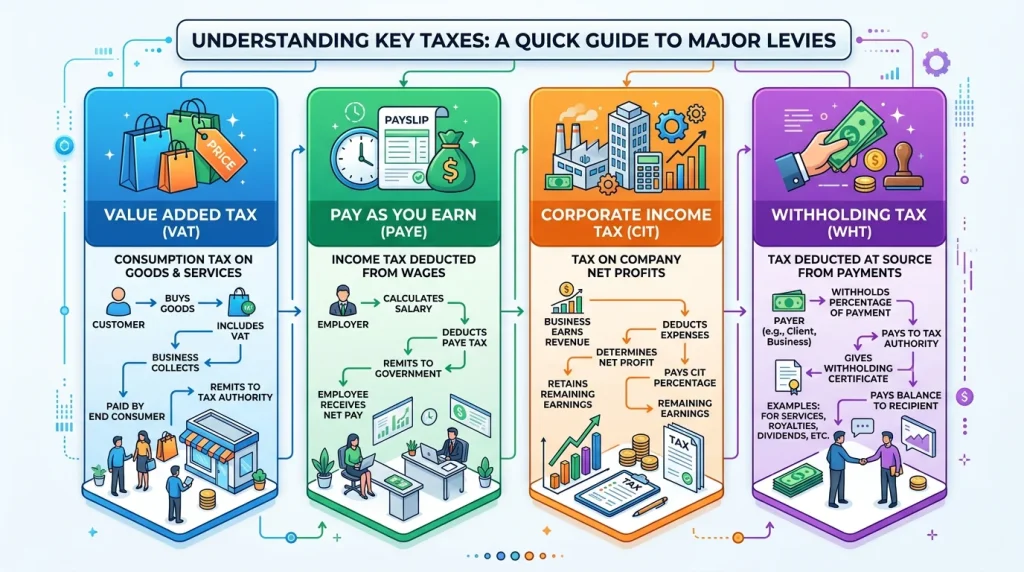
Nigeria has several important tax laws governing individuals, companies, investments, and commercial transactions.
1. Personal Income Tax Act (PITA)
This law governs taxes paid by:
- employees
- freelancers
- self-employed individuals
- consultants
It regulates:
- PAYE
- taxable income
- tax reliefs
- exemptions
- filing obligations
2. Companies Income Tax Act (CITA)
This regulates taxes paid by registered businesses and corporations operating in Nigeria.
Company tax rates vary based on annual turnover.
| Company Type | Annual Turnover | Tax Rate |
|---|---|---|
| Small Company | Below ₦25 million | 0% |
| Medium Company | ₦25m – ₦100m | 20% |
| Large Company | Above ₦100m | 30% |
This exemption for small companies is one of the most important tax benefits available to Nigerian SMEs.
3. Value Added Tax Act (VAT Act)
This law governs VAT collection on goods and services.
Current VAT rate in Nigeria: 7.5%
Example:
If a laptop costs: ₦200,000
VAT: ₦15,000
Total: ₦215,000
Businesses registered for VAT are expected to collect and remit VAT to FIRS.
4. Capital Gains Tax Act
Capital Gains Tax applies to profits made from selling assets such as:
- land
- shares
- investments
- property
Current Capital Gains Tax rate: 10%
5. Petroleum Profits Tax Act
This applies mainly to oil and gas companies operating within Nigeria’s petroleum industry.
6. Stamp Duties Act
This law governs stamp duties charged on qualifying transactions and documents.
For many electronic transfers:
- ₦50 stamp duty may apply on eligible transfers above regulatory thresholds.
Personal Income Tax (PAYE) Explained
Nigeria uses a progressive tax system under the Personal Income Tax Act.
This means higher earners pay higher tax rates.
Nigerian PAYE Tax Bands
| Annual Income Band | Tax Rate |
|---|---|
| First ₦300,000 | 7% |
| Next ₦300,000 | 11% |
| Next ₦500,000 | 15% |
| Next ₦500,000 | 19% |
| Next ₦1.6 million | 21% |
| Above ₦3.2 million | 24% |
Consolidated Relief Allowance (CRA)
Before taxes are fully calculated, Nigerian workers receive tax relief known as CRA.
The relief includes:
- ₦200,000 OR 1% of gross income (whichever is higher)
PLUS - 20% of gross annual income
This significantly reduces taxable income.
Tax Exemption Thresholds in Nigeria
Many low-income earners pay very little tax after deductions and reliefs are applied.
Individuals’ earnings:
- around ₦800,000 or below annually
may effectively pay minimal or no PAYE depending on:
- reliefs
- deductions
- pension contributions
This is important for low-income workers and small freelancers.
Example: Freelancer Tax Calculation in Nigeria
Suppose a freelance graphic designer earns:
- ₦500,000 monthly
- ₦6 million yearly
The person may need to consider:
- Personal Income Tax
- VAT obligations
- bookkeeping
- business registration
- withholding tax deductions
After applying CRA and allowable deductions, taxable income becomes lower than gross earnings.
This is why understanding deductions and reliefs is very important.
Value Added Tax (VAT) in Nigeria
VAT is one of the most common taxes Nigerians encounter daily.
Current VAT rate: 7.5%
VAT applies to:
- goods
- services
- subscriptions
- many commercial transactions
Businesses Exempt from VAT Collection
Small businesses with:
- annual turnover below ₦25 million
may not be required to charge VAT under current regulations.
This exemption is extremely important for startups and small Nigerian businesses.
Withholding Tax (WHT) in Nigeria
Withholding Tax acts as an advance tax payment deducted during certain transactions.
Common Withholding Tax Rates
| Transaction Type | WHT Rate |
|---|---|
| Dividends | 10% |
| Rent | 10% |
| Consultancy Services | 5%–10% |
| Contracts | 5% |
| Directors’ Fees | 10% |
Many freelancers and consultants experience WHT deductions from corporate clients.
Education Tax in Nigeria
Companies operating in Nigeria may also pay:
3% Education Tax
This tax supports tertiary education funding nationwide.
How Nigerian Tax Laws Affect Freelancers and Online Businesses

Many Nigerians earning money online mistakenly assume internet income is tax-free.
In reality, taxable online income may include earnings from:
- freelancing
- blogging
- YouTube
- affiliate marketing
- consulting
- remote work
- digital services
Freelancers receiving payments through:
- Payoneer
- bank transfers
- fintech apps
- international clients
may still fall under Nigerian tax regulations.
As Nigeria expands digital tax monitoring, online entrepreneurs should begin maintaining:
- invoices
- transaction records
- expense tracking
- financial statements
Readers interested in digital income strategies can also explore Ways to Make Money Online in Nigeria.
How to Register and Pay Tax in Nigeria
Registering for tax is now easier due to digital platforms introduced by FIRS.
Basic Tax Registration Steps
- Register your business with CAC if necessary.
- Obtain a Tax Identification Number (TIN).
- Register with FIRS or state tax authority.
- Maintain financial records.
- File tax returns before deadlines.
- Pay taxes through approved channels.
Tax filing can now be completed online through official portals.
Taxpayers should always keep:
- receipts
- invoices
- filing confirmations
- payment evidence
for future audits or disputes.
Penalties for Tax Non-Compliance in Nigeria
Ignoring tax obligations can result in serious financial penalties.
Company Filing Penalties
Late Filing
- ₦25,000 for the first month
- ₦5,000 for each additional month
VAT Filing Penalties
- ₦50,000 for first month
- ₦25,000 for subsequent months
Penalties continue accumulating until compliance is completed.
Why Tax Clearance Certificates Matter
A Tax Clearance Certificate (TCC) is increasingly important in Nigeria.
Many organisations request TCCs before approving:
- government contracts
- tenders
- loans
- grants
- visa applications
- official partnerships
Usually, taxpayers must provide:
- evidence of tax payments for the previous 3 years.
Pro Tips to Stay Compliant With Nigerian Tax Laws
Separate Personal and Business Finances
Many Nigerian entrepreneurs mix business money with personal spending. This creates accounting confusion and tax complications.
Separate accounts improve:
- bookkeeping
- transparency
- expense tracking
Keep Proper Records
Maintain:
- invoices
- receipts
- contracts
- payroll records
- expense documents
Good recordkeeping simplifies tax filing and audit responses.
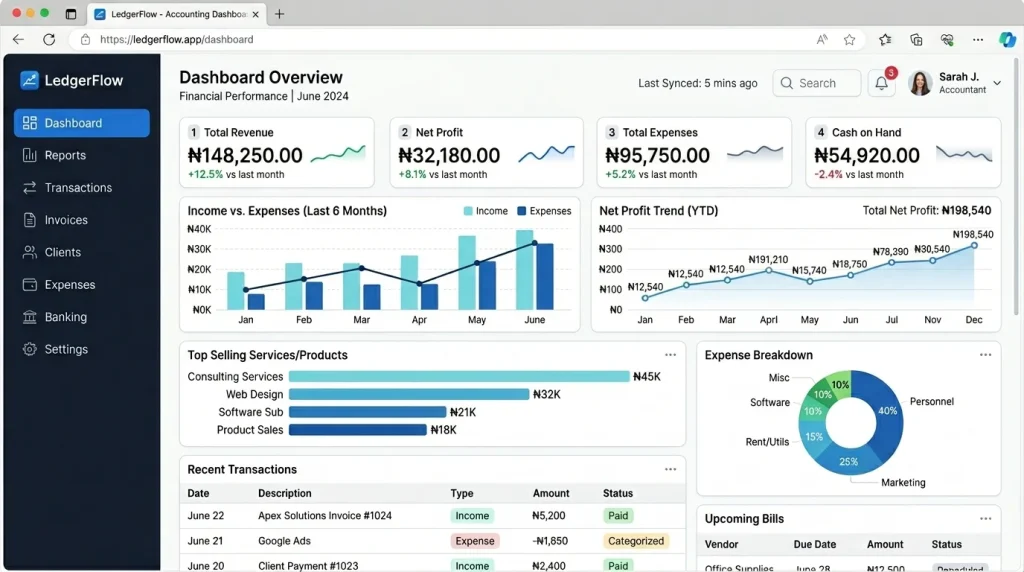
Use Accounting Software
Digital accounting tools reduce human error and improve financial organisation.
Useful tools include:
- QuickBooks
- Zoho Books
- Wave Accounting
- Microsoft Excel
File Early
Waiting until deadlines increases the likelihood of errors and penalties.
Create:
- reminders
- tax calendars
- monthly bookkeeping habits
Common Mistakes Nigerians Make With Taxes
Ignoring Tax Registration
Many small businesses delay registration because they believe they are too small to matter.
Unfortunately, delayed compliance can create future penalties.
Mixing Personal and Business Accounts
This makes it difficult to track taxable income accurately.
It also complicates audits and financial reporting.
Poor Bookkeeping
Missing invoices and incomplete records weaken tax filings and increase stress during audits.
Missing Filing Deadlines
Late filing often results in avoidable penalties and compliance issues.
Best Tools for Nigerian Tax Compliance
| Tool | Purpose | Pricing |
|---|---|---|
| FIRS TaxPro Max | Official tax filing platform | Free |
| QuickBooks | Accounting and bookkeeping | Paid |
| Wave Accounting | Simple bookkeeping | Free |
| Zoho Books | SME accounting software | Freemium |
| Microsoft Excel | Expense tracking | Paid |
These tools are accessible to many Nigerian users and simplify financial management.
People Also Ask About Nigerian Tax Laws
What taxes do Nigerians pay?
Nigerians may pay:
- Personal Income Tax
- VAT
- Company Income Tax
- Withholding Tax
- Capital Gains Tax
- Customs Duties
depending on income type and activities.
What is the Nigerian Tax Act?
The Nigerian Tax Act refers collectively to laws regulating taxation in Nigeria, including PITA, CITA, VAT Act, and Capital Gains Tax Act.
Does a freelancer pay tax in Nigeria?
Yes. Freelancers earning taxable income may be required to register and file taxes depending on earnings and business structure.
What is VAT in Nigeria?
VAT is a consumption tax charged at: 7.5% on many goods and services.
Who collects taxes in Nigeria?
The Federal Inland Revenue Service mainly collects federal taxes, while states collect personal income taxes through state revenue agencies.
FAQ About Nigerian Tax Laws
Are small businesses exempt from Company Income Tax?
Yes. Small companies earning below:
- ₦25 million annual turnover
Currently enjoy: 0% Company Income Tax under existing regulations.
Is online income taxable in Nigeria?
Yes. Income earned through freelancing, blogging, YouTube, consulting, and remote work may still be taxable.
What happens if I refuse to pay tax?
Failure to comply may result in:
- penalties
- interest charges
- audits
- enforcement actions
depending on the severity of non-compliance.
Is VAT compulsory for every business?
Not always. Businesses earning below:
- ₦25 million annual turnover
may qualify for VAT exemption under current rules.
Why is a Tax Identification Number important?
A TIN is required for:
- opening some corporate accounts
- tax filing
- government transactions
- business compliance
Final Thoughts
Nigerian Tax Laws affect employees, freelancers, startups, SMEs, and large corporations far more than many people realise. Understanding tax rates, exemptions, deductions, and filing requirements helps individuals and businesses avoid penalties while building stronger financial credibility.
The most important thing is not just knowing that taxes exist, but understanding:
- how much is payable
- who must pay
- available exemptions
- filing deadlines
- compliance requirements
As Nigeria continues modernising tax administration and expanding digital financial tracking, proper tax awareness is becoming essential for long-term business growth and financial stability.
For more finance and digital business guides, explore more educational resources on Bloog.ng and stay informed about Nigeria’s evolving financial landscape.