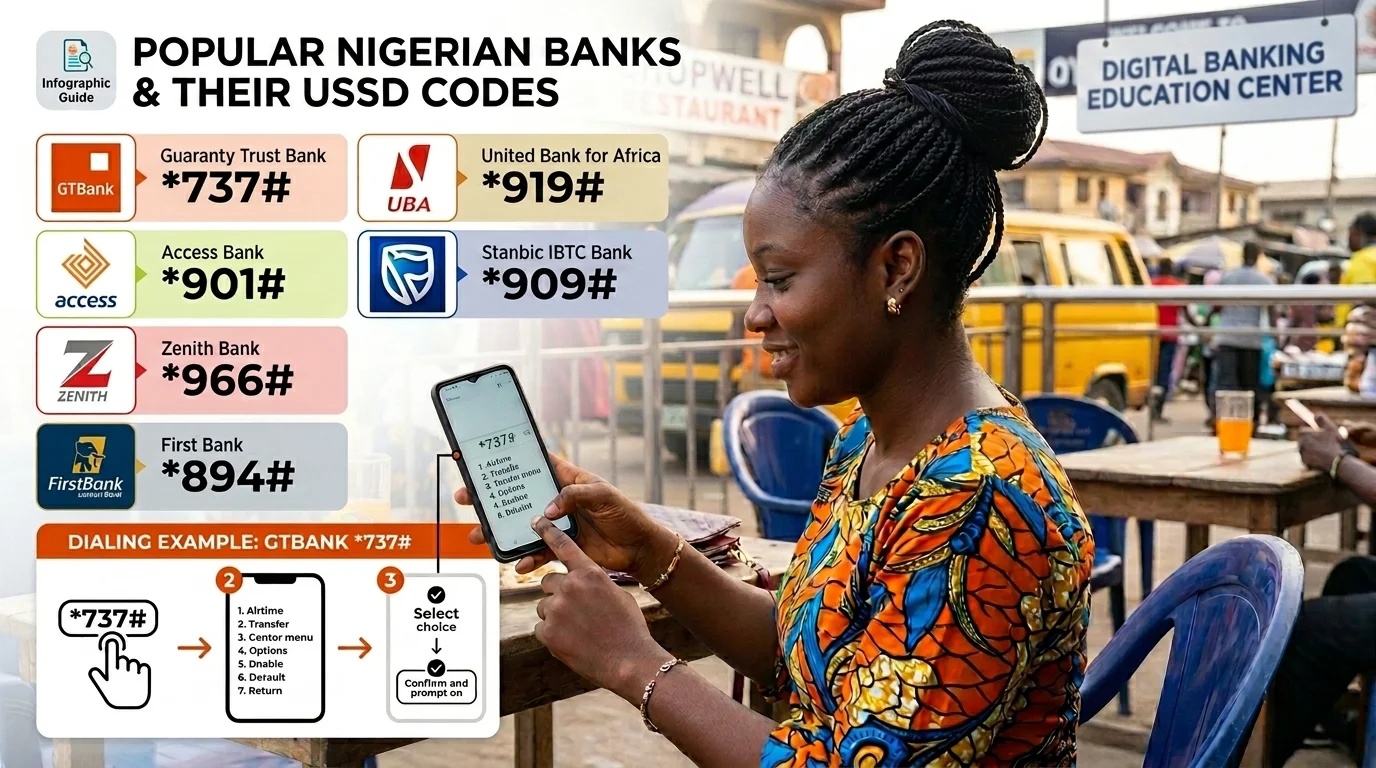

Mobile banking has become part of everyday life in Nigeria, especially as internet costs continue to rise and network reliability varies across regions. Nigerian bank USSD codes now give millions of people instant access to transfers, airtime purchases, balance checks, and bill payments without requiring mobile data or smartphones.

According to the Nigerian Communications Commission, mobile phone penetration in Nigeria remains extremely high, making USSD banking one of the most accessible financial technologies in the country. From traders in Lagos markets to students in rural communities, many Nigerians rely on simple banking codes for daily transactions.
Banks have also expanded their USSD services significantly over the past few years. What started mainly as airtime recharge now supports loan applications, card blocking, utility payments, betting wallet funding, and account opening. Understanding how these codes work can save time, reduce banking stress, and help users avoid common transaction errors.
Table of Contents
Why Nigerian Bank USSD Codes Matter More Than Ever
Nigerian bank USSD codes provide fast financial access even during poor internet connectivity. That single advantage has made them extremely valuable across Nigeria.
Many Nigerians experience unstable internet service or expensive data costs. In those situations, mobile banking apps may fail to load, especially during urgent transfers or emergency payments. USSD banking bypasses those limitations entirely because it works through GSM networks instead of internet connections.
The rise of digital banking in Nigeria has also increased dependence on instant transactions. Small business owners frequently use USSD codes to receive customer payments quickly. Commercial drivers use them to buy airtime instantly. Parents use them to transfer money to children in school. The convenience fits naturally into Nigerian daily life.
Several factors explain why USSD banking continues to grow:
- It works on both smartphones and feature phones
- Transactions are usually completed within minutes
- No mobile data subscription is required
- Registration is relatively simple
- Most Nigerian banks now support extensive USSD features
- Banking services become accessible in rural communities
Security improvements have also strengthened confidence in USSD banking. Banks now require transaction PINs, device verification, and account authentication before sensitive actions can be completed.
For many Nigerians, USSD banking is not just a backup option anymore. It has become the primary way they handle everyday banking.
Complete List of Nigerian Bank USSD Codes and Their Uses
The complete list of Nigerian bank USSD codes helps users quickly access mobile banking services without repeatedly searching online.
| Bank | USSD Code | Main Uses |
|---|---|---|
| Access Bank | *901# | Transfers, airtime, balance check |
| First Bank | *894# | transfer money, buy airtime, check balances, and open accounts |
| GTBank | *737# | Transfers, airtime, balance check |
| UBA | *919# | Transfers, betting payments |
| Zenith Bank | *966# | Bills, transfers, airtime |
| Fidelity Bank | *770# | Transfers and balance checks |
| Union Bank | *826# | Fund transfers and utilities |
| Sterling Bank | *822# | Transfers, airtime, balance check |
| FCMB | *329# | Transfers, airtime, balance check |
| Ecobank | *326# | Xpress banking |
| Polaris Bank | *833# | Transfers, airtime, balance check |
| Wema Bank | *945# | Transfers, airtime, balance check |
| Stanbic IBTC | *909# | Transfers, airtime, balance check |
| Keystone Bank | *7111# | Basic banking |
| Jaiz Bank | *773# | Transfers, airtime, balance check |
| Unity Bank | *7799# | Transfers, airtime, balance check |
| Providus Bank | *903# | Transfers, airtime, balance check |
| Heritage Bank | *745# | Transfers, airtime, balance check |
| Titan Trust Bank | *922# | Transfers, airtime, balance check |
| TAJBank | *898# | Transfers, airtime, balance check |
Common Uses Across Most Banks
Most Nigerian bank USSD codes support these services:
- Money transfers
- Airtime purchases
- Data subscription payments
- Electricity bill payments
- Cable TV subscriptions
- Account balance inquiries
- Mini statements
- ATM card blocking
- PIN reset services
Why Some Codes Differ
Banks design their USSD systems differently based on infrastructure and partnerships. Some banks focus heavily on fintech integrations, while others prioritise simple banking transactions.
For example, some banks support betting wallet funding directly through USSD because of customer demand. Others emphasise savings products or loan requests.
Users should always verify codes from official bank channels because fraudsters sometimes circulate fake banking codes online.
How Nigerian Bank USSD Codes Work
USSD banking works through short communication sessions between your mobile phone and your bank’s banking server.
When a user dials a banking code such as *737# or *901#, the request travels through the telecom provider to the bank’s USSD platform. The bank then processes the request and sends menu options back to the phone screen almost instantly.
Unlike mobile apps, USSD banking does not depend on internet access. That is why even old feature phones can use banking services effectively.
The Basic Process
Most Nigerian bank USSD systems follow a similar process:
- Dial the bank’s USSD code
- Select a service option
- Enter required details
- Confirm transaction amount
- Input secure PIN
- Receive confirmation message
Banks usually link the service to the phone number registered with the bank account. That linkage improves security and reduces fraud risks.
Transaction Charges and Limits
USSD banking is convenient, but it is not always free. Nigerian banks and telecom operators often apply:
- Session fees
- Transfer charges
- SMS notification costs
Daily transaction limits may also apply depending on the bank and customer verification level.
Users performing large transactions may still need mobile apps or physical banking channels.
What Is the USSD Code for All Nigerian Banks?
There is no single USSD code that works for all Nigerian banks. Every bank in Nigeria has its own dedicated USSD code designed specifically for its customers and banking services.
For example, GTBank uses *737#, while Access Bank uses *901#. These codes allow customers to perform transfers, airtime purchases, bill payments, balance checks, and other banking operations directly from their phones without internet access.
The easiest way to use Nigerian bank USSD codes correctly is to:
- Use the phone number linked to your bank account
- Dial your bank’s official USSD code
- Follow the menu instructions carefully
- Create a secure transaction PIN
- Confirm transaction details before submission
Banks regularly update their mobile banking services, so users should confirm codes through official bank websites or customer care channels.
Benefits of Using USSD Banking in Nigeria
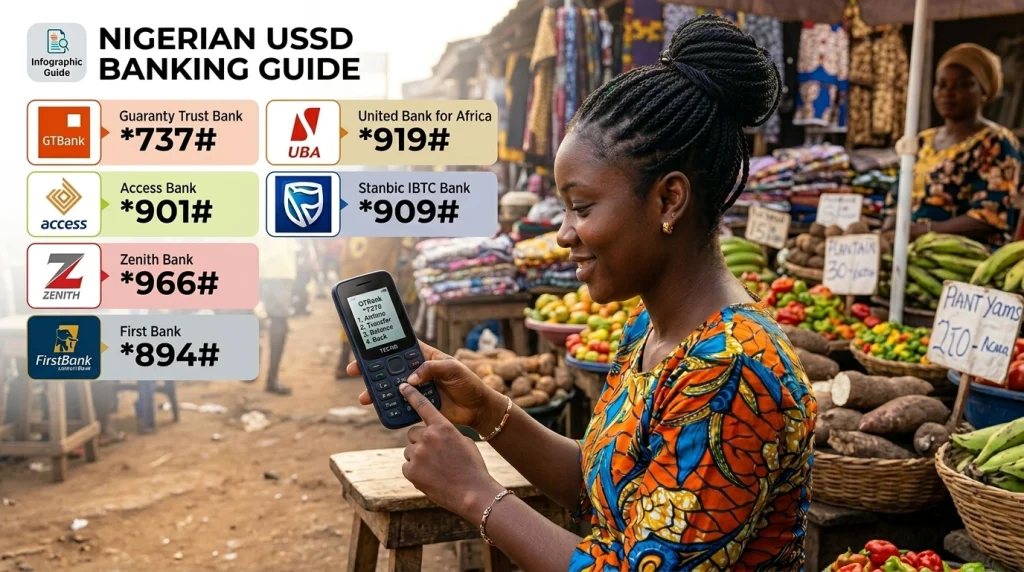
USSD banking delivers practical benefits that match the realities of Nigerian internet infrastructure and mobile usage habits.
One major advantage is accessibility. Many Nigerians still use feature phones that cannot install banking apps. USSD banking ensures those users are not excluded from digital financial services.
Another benefit is speed. During busy periods when banking apps slow down, USSD transfers often remain functional because they require less bandwidth and fewer system resources.
Key Benefits Nigerian Users Enjoy
- Banking access without mobile data
- Faster transactions during network congestion
- Compatibility with all mobile devices
- Useful backup when banking apps fail
- Easier access for rural communities
- Lower technical complexity
Financial Inclusion Impact
USSD banking has contributed significantly to financial inclusion in Nigeria. Millions of Nigerians who previously relied only on cash transactions now use digital financial services daily.
This shift supports:
- Safer money transfers
- Reduced cash handling risks
- Easier bill payments
- Better banking access nationwide
The continued growth of fintech companies in Nigeria also complements USSD banking expansion.
Security Risks and How to Stay Safe
USSD banking is convenient, but users must understand the security risks involved.
Fraudsters increasingly target Nigerian banking customers through phishing calls, fake SMS messages, and social engineering scams. Some criminals pretend to be bank representatives and request PINs or OTP codes.
Banks never ask customers to reveal their transaction PINs. Any request for confidential banking details should immediately raise suspicion.
Common Security Threats
The most common risks include:
- SIM swap fraud
- Fake customer care numbers
- Phishing SMS messages
- Device theft
- Public phone usage
- Shoulder surfing during transactions
Smart Security Practices
To stay safe while using Nigerian bank USSD codes:
- Never share your PIN
- Avoid performing transactions in crowded environments
- Lock your SIM card with a password
- Report suspicious SMS immediately
- Use only official banking codes
- Block your account quickly if your phone is stolen
Many Nigerian banks now offer instant card-blocking USSD features specifically for emergency situations.
Pro Tips to Use Nigerian Bank USSD Codes Safely
Experienced users follow several smart practices that reduce errors and improve banking security.
One important tip is to save official bank codes in your contacts. This reduces the chance of dialing incorrect codes during emergencies or stressful situations. Fraudsters sometimes spread fake codes online to steal customer details.
Another useful habit is checking transaction confirmations carefully before exiting the session. Many Nigerians assume transactions failed when network delays occur, then repeat transfers accidentally.
Additional Pro Tips
Always maintain updated SIM registration details with your bank and telecom provider. If your SIM registration details become inconsistent, account verification problems may occur during future banking requests.
It is also wise to activate SMS alerts even if they involve small charges. Those alerts help users detect suspicious activity quickly.
Many Nigerians overlook transaction limits until urgent transfers become necessary. Understanding your bank’s daily USSD transfer limit helps avoid unexpected delays.
Finally, users handling large transfers regularly should combine USSD banking with secure mobile banking apps for greater flexibility.
Common Mistakes to Avoid with Nigerian Bank USSD Codes
Using Unverified Banking Codes
Many users search random websites for banking codes and accidentally use outdated or fake information.
The consequence can range from failed transactions to exposure to fraud schemes. Always verify banking codes through official bank websites or customer support channels.
Sharing Transaction PINs
Some customers reveal transaction PINs to friends, relatives, or fake support agents.
This creates serious financial risks because anyone with access to the PIN and registered phone can perform transactions. PINs should remain strictly private.
Ignoring Failed Transaction Alerts
Failed transfers sometimes reverse automatically after network recovery.
Users who immediately repeat transactions without checking account balances may accidentally send duplicate payments. Always confirm account activity before retrying transfers.
Performing Transactions on Borrowed Phones
Using another person’s phone for USSD banking creates privacy and security risks.
Sensitive account details may remain visible in message history or session records. Users should avoid conducting important financial transactions on shared devices.
SIM Security Features
Many telecom providers now support SIM locks and security PINs.
This extra protection becomes useful if a phone is stolen. Most Nigerian networks support these features at no extra cost.
Banking Alert Services
SMS and email alert services help users monitor suspicious account activity quickly.
While some alerts involve small monthly charges, the security benefits often outweigh the costs.
FAQ – Nigerian Bank USSD Codes
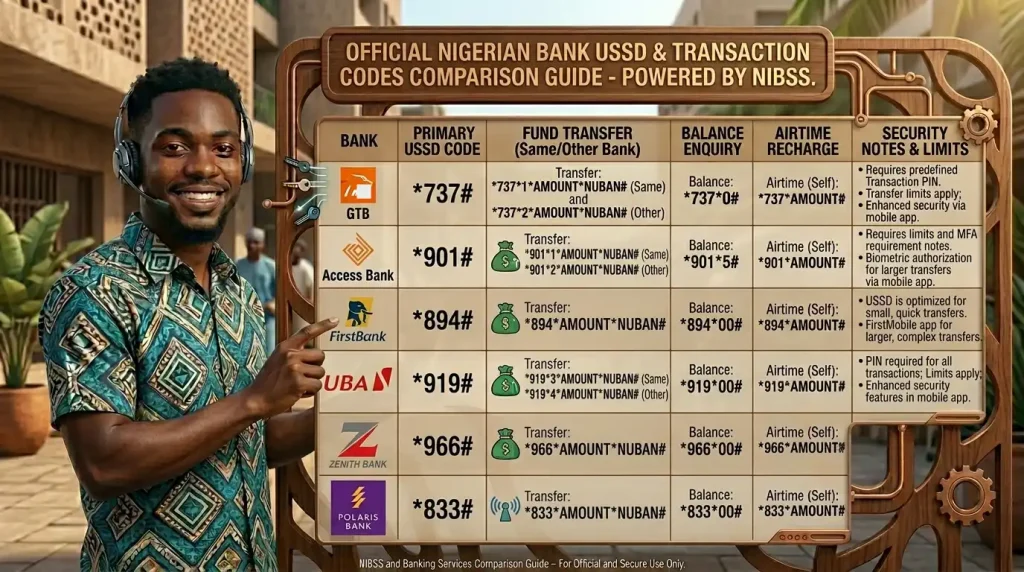
How do I activate Nigerian bank USSD codes?
Activation usually involves dialling your bank’s USSD code and following registration prompts. Most banks request debit card verification and transaction PIN setup before activation completes.
Can I transfer money to another bank using USSD?
Yes. Most Nigerian bank USSD codes support interbank transfers to other commercial banks in Nigeria. Transfer limits and charges vary by bank.
What happens if my USSD transfer fails?
Failed transfers may reverse automatically within minutes or hours, depending on the bank and network conditions. Customers should monitor balances and contact customer support if reversals delay excessively.
Are Nigerian bank USSD codes secure?
USSD banking is generally secure when users protect their transaction PINs and avoid scams. Banks use authentication layers and encrypted telecom channels to protect transactions.
Can I block my ATM card using Nigerian bank USSD codes?
Yes. Many Nigerian banks provide emergency card-blocking features through their USSD platforms. This helps customers respond quickly if cards or phones are stolen.
Can I use Nigerian bank USSD codes without internet?
Yes. Nigerian bank USSD codes work without internet access because they use GSM communication channels instead of mobile data. This makes them useful in areas with weak internet service or for users with feature phones.
Which bank has the best USSD code in Nigeria?
Many Nigerians consider GTBank, Access Bank, and UBA among the best USSD banking services because of their reliability, speed, and extensive banking options. However, the best service often depends on network coverage and personal banking preferences.
Are Nigerian bank USSD codes free?
Most Nigerian bank USSD sessions involve small telecom and banking charges. Users may pay session fees, transfer fees, or SMS alert costs depending on the transaction type and bank policies.
Can USSD bank Code work on Airtel, MTN, Glo, and 9mobile?
Yes. Nigerian bank USSD services generally work across all major telecom networks, including MTN, Airtel, Glo, and 9mobile, provided the SIM card is linked to the bank account.
Mobile banking continues to reshape how Nigerians handle everyday financial transactions. Nigerian bank USSD codes remain one of the simplest and most accessible ways to transfer money, buy airtime, pay bills, and manage accounts without internet access.
The most important takeaway is that convenience should always be balanced with security. Using verified codes, protecting transaction PINs, and understanding transfer procedures can help users avoid costly mistakes and fraud risks.
As Nigerian banks continue expanding digital services, USSD banking will likely remain essential because of its compatibility with all mobile devices and broad accessibility across urban and rural communities.
For more practical digital finance guides, explore BLOOG.NG and read our resources on online income, blogging, and fintech trends in Nigeria. You can also share your preferred bank USSD experience or security tips in the comments section.